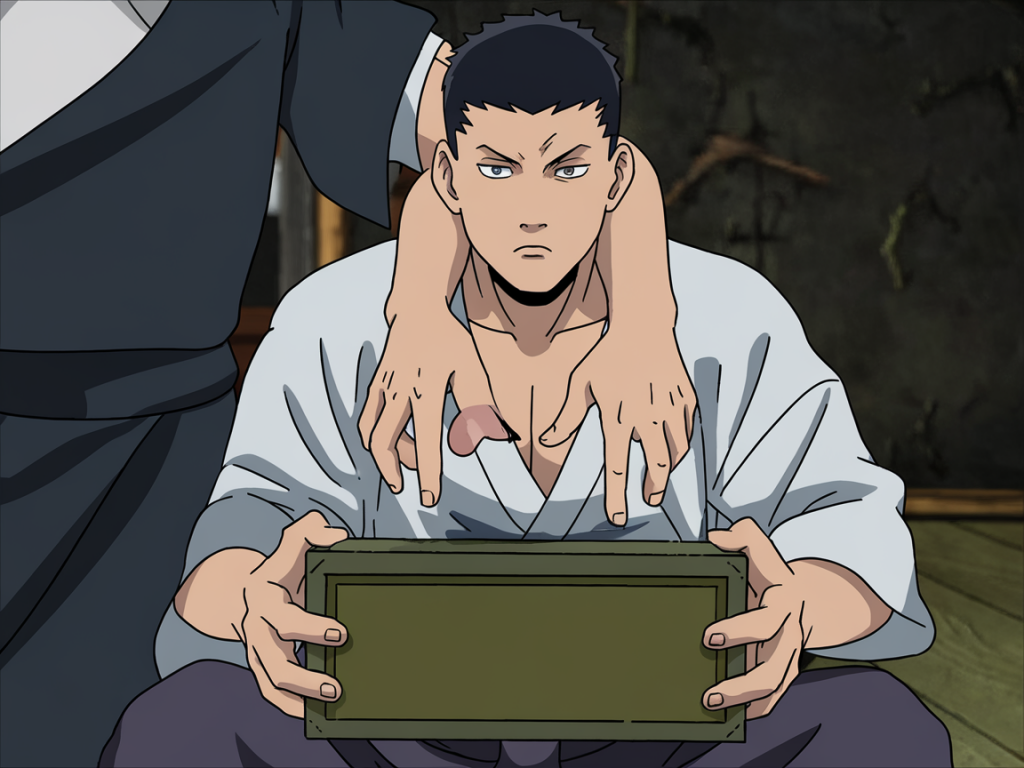
When Yuji Itadori swallowed the first of Sukuna's fingers, most of us were watching with our mouths slightly open — part horrified, part fascinated. But beyond the shock value, that moment is a turning point for his moral compass. Over the course of the series, eating Sukuna's fingers doesn't just give Yuji cursed energy and a mouthpiece for a sadistic alternate personality; it reshapes how he understands life, death, responsibility, and what it means to be humane in a world that constantly devalues both bodies and souls.
Immediate moral consequences: survival vs. agency
At first, Yuji's decision is framed as an act of pure compassion: he swallows the finger to save Megumi and the others from a sudden cursed attack. In that instant, his choice is reactive and altruistic. But the act itself strips away a layer of moral agency — he gambles with a power that originated in cruelty and centuries of malevolence.
This creates a recurring tension in his character: Yuji wants to be kind and protective, yet his survival depends on consuming relics of a genocidal sorcerer. It's a moral dissonance he must constantly reconcile. Is it better to use a tainted tool to save lives, or to refuse that power and potentially let innocents die? For Yuji, the answer begins in the same place that defines many of his actions: immediate human need overrides philosophical purity.
Deadlines and value systems: "save people, help people"
Yuji's core creed — "save people, help people" — is both a moral anchor and a challenge. After ingesting Sukuna's fingers, that creed becomes more urgent and complicated. He's now a living vessel for a king of curses, which means his successes and failures have stakes beyond his personal survival.
Eating the fingers forces Yuji to confront what he values and why. Instead of abstract ideals about justice, he works in high-pressure scenarios where choices have immediate, visceral consequences. That practical morality pushes him toward utilitarian decisions at times, but he resists fully becoming ends-justify-the-means pragmatic. He remains painfully human — empathetic, impulsive, and often guided by emotion — which makes his moral evolution messy and authentic.
Boundaries tested: the pull of violence and restraint
One of the most compelling shifts is how Yuji negotiates violence. Sukuna's presence amplifies destructive tendencies and normalizes brutality. In scenes where Sukuna takes control, violence is a performance: efficient, cruel, and reveling in suffering. For Yuji, seeing what ease looks like when unburdened by conscience is terrifying and illuminating.
He learns restraint in the extreme: not because he doubts the effectiveness of lethal force, but because he fears becoming what Sukuna revels in. Each finger consumed is a tiny victory for a system that prizes power over compassion, so Yuji doubles down on restraint as a way to preserve his identity. That restraint isn't always moral high ground — it's often fear-driven — but it's central to his evolving ethic.
Agency regained: bargaining with fate and identity
Over time, Yuji's morality shifts from defensive to proactive. Early on he reacts: he eats a finger, fights a curse, survives. Later, he makes plans, takes responsibility for the consequences of his possession, and accepts the obligations imposed by others (like his pact to be executed after Sukuna is fully resurrected). This acceptance is paradoxical — he's voluntarily accepting punishment for crimes he hasn't committed yet — but it highlights a profound moral development.
By choosing his own end (or at least consenting to it), Yuji asserts a form of agency that counters the involuntary nature of Sukuna's occupation. It's a moral statement: he will not allow his life to be co-opted for destruction. Instead, he'll convert his existence into a barrier against further harm. That transformation marks a move from victimhood to moral authorship.
Empathy as strength, not weakness
One of the series' most consistent messages — and one Yuji embodies — is that empathy is a viable tactic against chaos. The fingers increase his power, but also his opportunities to see suffering firsthand. Rather than hardening him, these experiences deepen his compassion.
He can watch Sukuna's indifference and still feel sorrow for the cursed and the living. This is key: Yuji's morality doesn't become relativistic because he harbors a monster. Instead, it becomes more absolute in practice. He judges actions by their human impact — an ethic that often pits him against other sorcerers or systems that treat people as expendable. His empathy becomes a tool, a reason to fight harder and smarter.
Moral ambiguity and the influence of mentors
Characters like Gojo, Nanami, and even Sukuna (in a perverse way) shape Yuji's moral growth. Gojo's lawlessness and occasional flippancy present an alternative model: power without restraint. Nanami offers professionalism and duty; he shows a path where morals are tied to vocation and sacrifice. Sukuna's existence, meanwhile, is the negative space — a reminder of what Yuji must prevent.
These influences create a nuanced moral education. Yuji isn't molded into a stereotype; he synthesizes lessons and mistakes into a personal ethic. His initial black-and-white view of good versus evil softens into a more sophisticated understanding: sometimes you have to make dirty choices to protect people, but your ends should always honor the dignity of those lives.
How the fingers reframe responsibility
Consuming Sukuna's fingers doesn't just give Yuji power; it hands him a ledger of responsibility. Each finger eaten is like an IOU on a ledger kept by fate and other sorcerers. Yuji's moral evolution is, in many ways, a series of transactions: he gains power, he pays with obligation, he pays with sacrifice.
That framing changes how he approaches battles and relationships. He stops seeing himself as merely a high schooler thrown into supernatural chaos and starts seeing himself as an actor in a system that requires sacrificial guardianship. It's a heavy mantle, and his acceptance of it drives much of the narrative force behind his decisions.
Practical signs of change (a quick list)
| Before eating fingers | After eating fingers |
| Idealistic, reactive heroism | Practical, sacrifice-minded protector |
| Limited exposure to moral complexity | Faces systemic and existential ethical dilemmas |
| Life-centric compassion | Life-centric compassion with strategic restraint |
At the heart of it, Yuji's moral arc is about balancing an irreducible kindness with the brutal facts of the Jujutsu world. The fingers are a narrative device that force-feed him corruption, but they also clarify his values. By surviving Sukuna's intrusion and choosing, again and again, to be humane, Yuji becomes a moral fulcrum in a story that constantly tests the boundaries of what it means to be human.